
Impaired-p53 in cancer
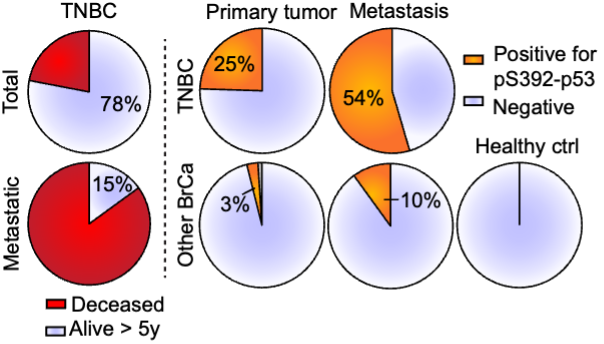
Cleara Biotech is pursuing a lead program targeting cancer cells with impaired p53 signaling, particularly those with mutated p53. Impaired-p53 cancer cells can exhibit elevated phosphorylation of the C-terminal residue serine 392 (pS392-p53), among other characteristics. In many types of cancer, such as triple negative breast cancer (TNBC), pS392-p53 levels are substantially elevated. This effect is even more pronounced in progressive and metastatic disease, indicating a significant unmet medical need that could be addressed with therapies targeting this modification.
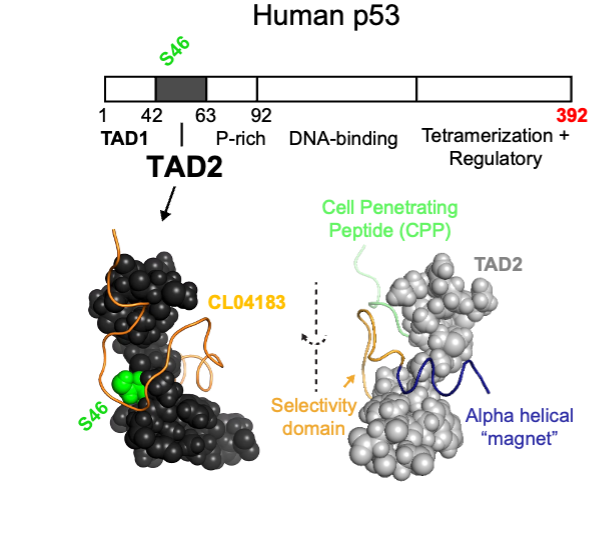
Cancer cells with impaired p53 signaling can accumulate a multi-phosphorylated form of p53. Building on our discovery of the natural FOXO4-p53 interaction over two decades ago and extensive structural and molecular biology research, Cleara’s scientists developed the lead compound CL04183. This compound specifically binds to this type of phosphorylated p53 and selectively targets cancer cells with impaired p53 signaling, inducing transcription-independent cell death (apoptosis).